Laboratory Technology: Biotechnology is a career program that prepares students to create new products in laboratories. While studying and working in that field of study, different biological terms will be utilized. Indeed, here is a glossary that contains 20 different terms that can help with the comprehension of the vocabulary. In this glossary, there will be different biological words, parts of speech, definitions directly from Google Search, text-to-speech pronunciations, images from Wikimedia Commons and Google Images, direct French translations, some examples from Lextutor Concordancer also, Google Search.
Antibody
noun
A blood protein produced in response to and counteracting a specific antigen. Antibodies combine chemically with substances which the body recognizes as alien, such as bacteria, viruses, and foreign substances in the blood.
Example: This ANTIBODY if administered from early childhood, possibly through diet, might be effective at preventing intestinal infection.
en: Anticorps
Antigen
noun
A toxin or other foreign substance which induces an immune response in the body, especially the production of antibodies.
Example: It is the basis for the ability of the immune system to recognize virtually a foreign ANTIGEN.
en: Antigène
Biology
noun
The study of living organisms, divided into many specialized fields that cover their morphology, physiology, anatomy, behavior, origin, and distribution.
Example: Valuable interpretive ideas may be found in journals of psychology, aesthetics, philosophy, history, religion, sociology, anthropology, even medicine and BIOLOGY, although these may not be matched up with descriptions and evaluations of art.
en: Biologie
Biopharmaceutical
noun
A biological macromolecule or cellular component, such as a blood product, used as a pharmaceutical.
Example: Beetles, with their unparalleled species and habitat diversity, might be a major untapped source of antibiotics and BIOPHARMACEUTICALS.
en: Biopharmaceutique
Biotechnology
noun
The exploitation of biological processes for industrial and other purposes, especially the genetic manipulation of microorganisms for the production of antibiotics, hormones, etc.
Example: Increasingly, environmental BIOTECHNOLOGY is being heralded as a means of controlling and improving environmental quality and it is also being applied to mineral extraction and resource recycling.
en: Biotechnologie
Cell
noun
The smallest structural and functional unit of an organism, typically microscopic and consisting of cytoplasm and a nucleus enclosed in a membrane. Microscopic organisms typically consist of a single cell, which is either eukaryotic or prokaryotic.
Example: This work describes the manufacture and testing of microfabricated voltammetric electrode arrays for the neuroelectrical and neurochemical study of neurons in CELL culture.
en: Cellule
Chromosome
noun
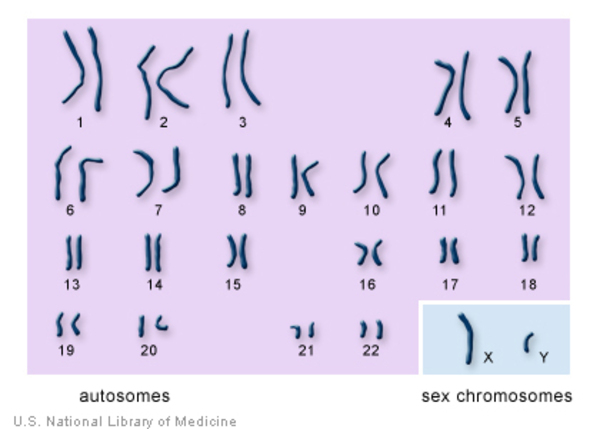
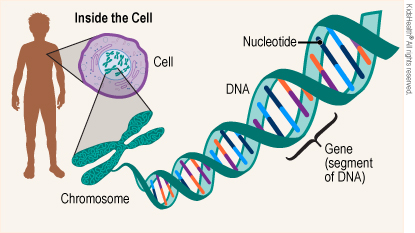
A threadlike structure of nucleic acids and protein found in the nucleus of most living cells, carrying genetic information in the form of genes.
Example: The individual criminal is born so; and this is usually put down to "faulty CHROMOSOME patterns", or, more vaguely, to "hereditary traits".
en: Chromosome
DNA
noun
A self-replicating material that is present in nearly all living organisms as the main constituent of chromosomes. It is the carrier of genetic information.
Example: I developed field techniques to catch birds and to collect DNA samples from chicks and incubating males.
en: ADN
Gene
noun
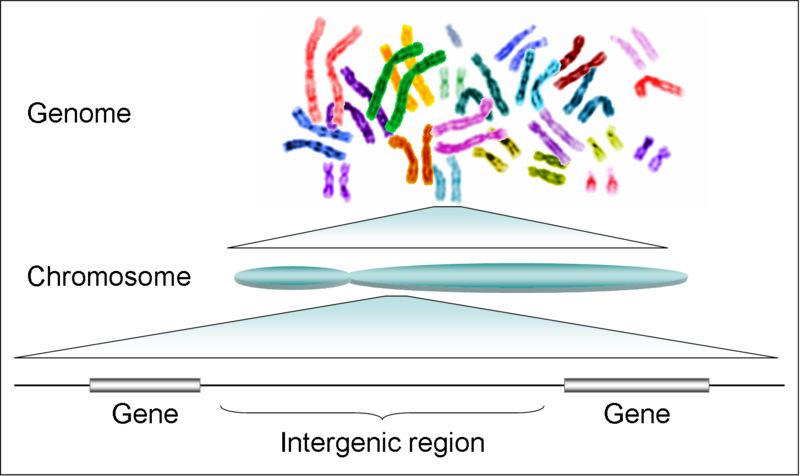
A distinct sequence of nucleotides forming part of a chromosome, the order of which determines the order of monomers in a polypeptide or nucleic acid molecule which a cell (or virus) may synthesize.
Example: Of course, if an animal could distinguish close relatives from distant ones, then selection would favour a GENE causing altruistic acts to be directed preferentially towards the former.
en: Gène
Genetic
adjective
Relating to genes or heredity.
Example: A GENETIC evolutionary model organizes the existing data on gift giving and makes novel, testable predictions.
en: Génétique
Genetic Engineering
noun
The deliberate modification of the characteristics of an organism by manipulating its genetic material.
Example: What is of more environmental significance, however, is the subdiscipline of biotechnology that is known as GENETIC ENGINEERING.
en: Ingénierie génétique
Genome
noun
The complete set of genes or genetic material present in a cell or organism.
Example: A good scientific example of this is the current work on molecular biology and the human GENOME project.
en: Génome
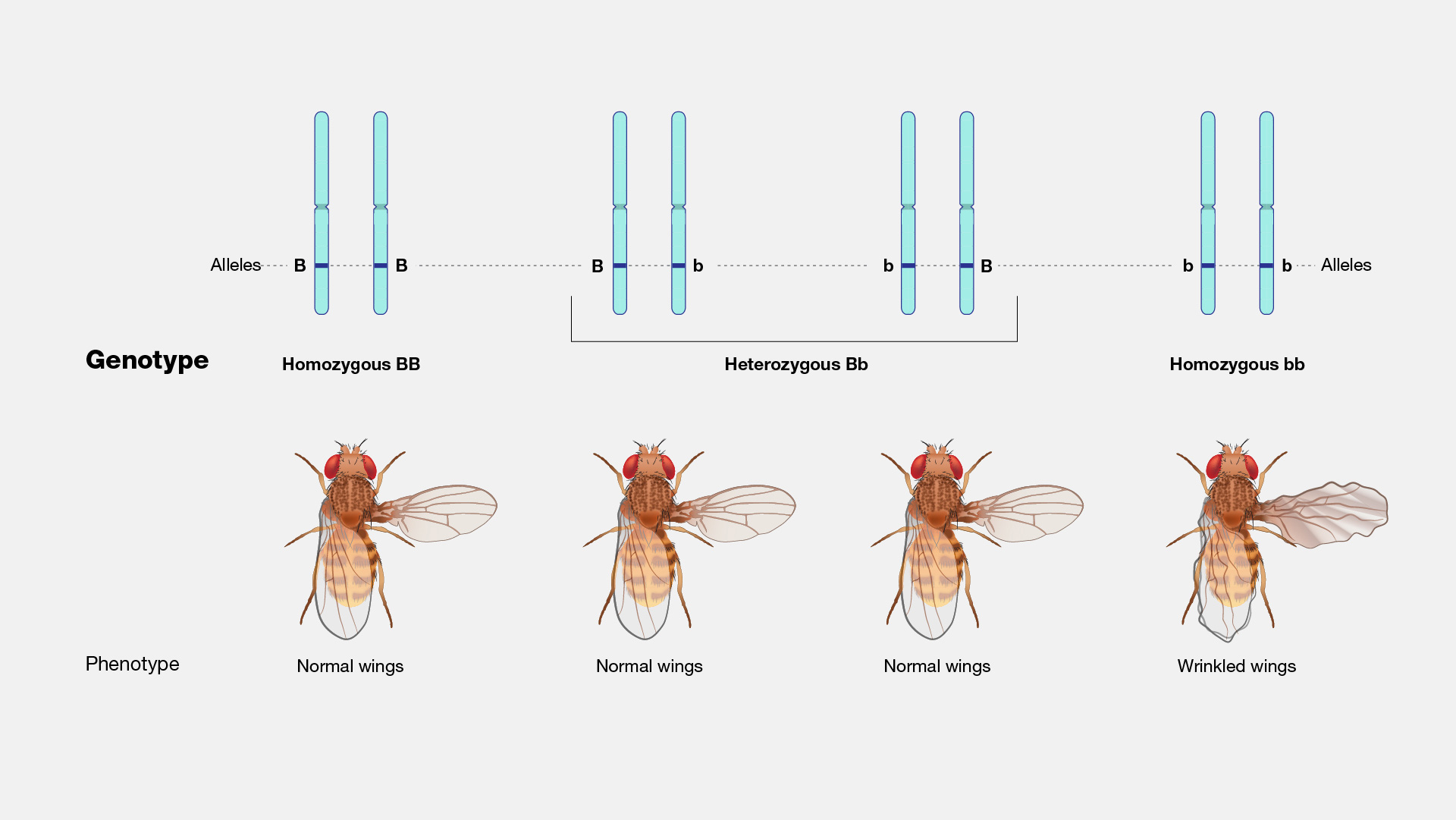
Genotype
noun
The genetic constitution of an individual organism.
Example: They therefore remove individuals with a similar GENOTYPE and not the more genetically diverse organisms.
en: Génotype
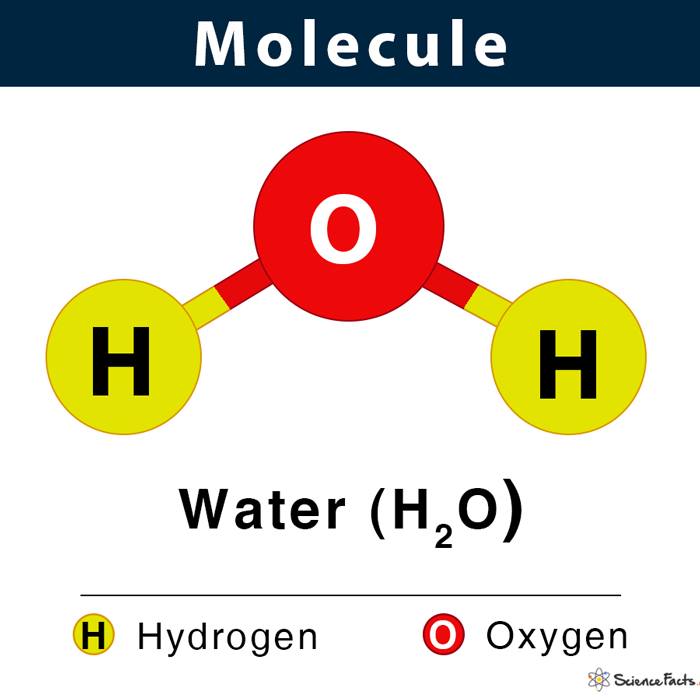
Molecule
noun
A group of atoms bonded together, representing the smallest fundamental unit of a chemical compound that can take part in a chemical reaction.
Example: These results are discussed in the context of a novel model for regulation of the light reactions.Essentially all events in biology require one MOLECULE binding to another.
en: Molécule
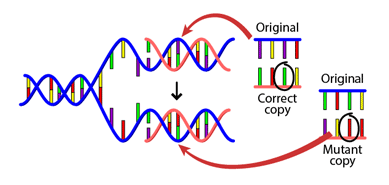
Mutation
noun
The changing of the structure of a gene, resulting in a variant form that may be transmitted to subsequent generations, caused by the alteration of single base units in DNA, or the deletion, insertion, or rearrangement of larger sections of genes or chromosomes.
Example: This is a sickness akin to radiation poisoning which causes a high rate of "chemical MUTATION" and makes the colourless an unreliable source of labour.
en: Mutation
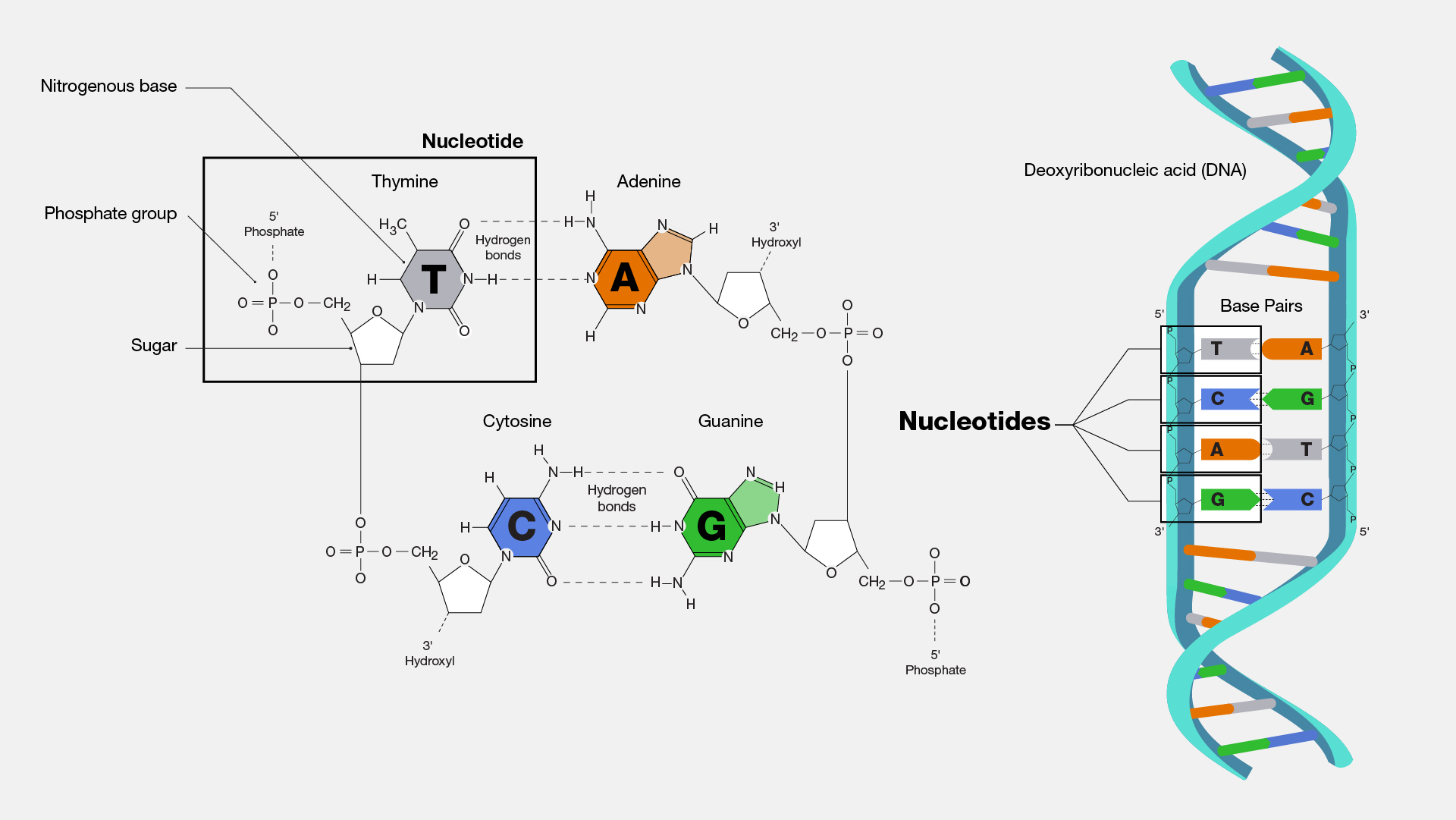
Nucleotide
noun
A compound consisting of a nucleoside linked to a phosphate group. Nucleotides form the basic structural unit of nucleic acids such as DNA.
Example: A microsomal de-iodinase with a pH optimum of around 8, and requiring reduced triphosphopyridine NUCLEOTIDE for activity, has been identified in the thyroid (Stanbury, 1957).
en: Nucléotide
Phenotype
noun
The set of observable characteristics of an individual resulting from the interaction of its genotype with the environment.
Example: Selection of successful competitors is the prime mechanism in evolution. (4) The unit of selection is the individual PHENOTYPE: this, however, implies that the ultimate unit of selection is the gene that contributes successful traits.
en: Phénotype
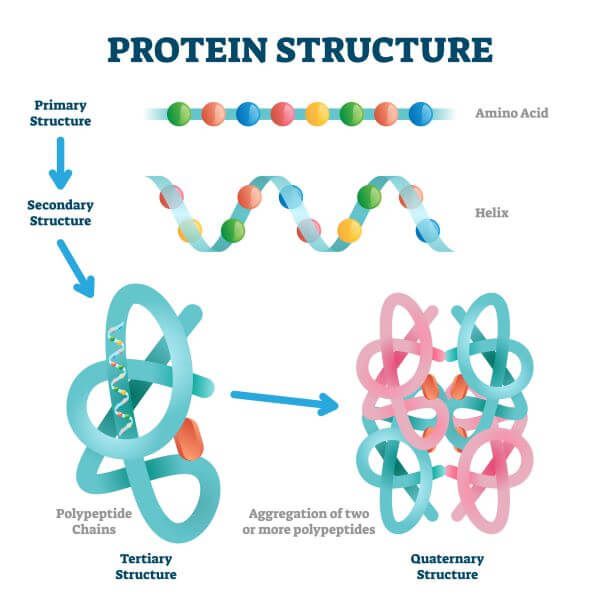
Protein
noun
Any of a class of nitrogenous organic compounds that have large molecules composed of one or more long chains of amino acids and are an essential part of all living organisms, especially as structural components of body tissues such as muscle, hair, etc., and as enzymes and antibodies.
Example: Using genetic engineering it is now possible to remove the gene that produces this PROTEIN and to produce large volumes of the new bacterium which, if sprayed on a newly planted crops, will considerably reduce frost damage.
en: Protéine
Vaccine
noun
A substance used to stimulate immunity to a particular infectious disease or pathogen, typically prepared from an inactivated or weakened form of the causative agent or from its constituents or products.
Example: Every year the flu vaccine is modified to deal with new strains of the virus.
en: Vaccin
Virus
noun
An infective agent that typically consists of a nucleic acid molecule in a protein coat, is too small to be seen by light microscopy, and is able to multiply only within the living cells of a host.
Example: Yet they are the only animal known in whose bloodstream the AIDS VIRUS survives for any length of time.


:max_bytes(150000):strip_icc()/biotechnology-research--female-scientist-mixing-a-chemical-formula-1023297106-f4b1a6296ed049f197b78eb7e185cfdb.jpg)